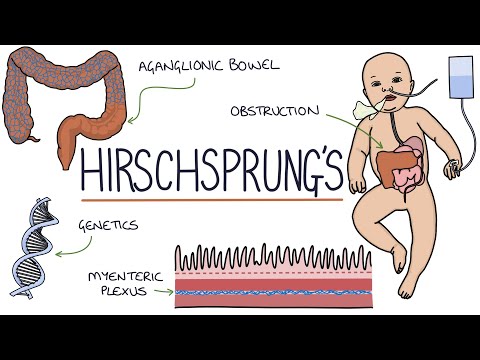


Hirschsprung disease is a disorder of the digestive system, often resulting from intestinal obstruction. The disease is typically cured with surgery. The goal of surgery is to remove the diseased section of the intestine and pull the healthy portion through the anus. This surgical technique is known as a “pull-through” and is minimally invasive. A surgeon will discuss the various surgical options with you. This type of operation is most often performed on a person who has already been diagnosed with Hirschsprung disease.
Symptoms
The symptoms of Hirschsprung disease may be difficult to spot in an infant, but if you suspect that your child may have the disease, a trip to the doctor will be in order. X-rays of the abdomen can help your physician find obstructions in the intestines and confirm the diagnosis. A rectal thermometer and digital rectal examination are also recommended.
Hirschsprung disease symptoms include abdominal distention and difficulty in feeding. It affects approximately one out of every 5,000 live births. It is three times more common in boys than in girls. About 12% of cases have a genetic cause. The most common causes are Down syndrome and Mowat-Wilson syndrome.
Surgical treatment is available for children with Hirschsprung’s disease. The procedure usually involves the removal of a section of the large intestine and reconnecting the remaining normal intestine. Sometimes, a temporary stoma is created to facilitate bowel movement. The stoma is then sewn closed. Hirschsprung disease is most often diagnosed during childhood, though it can manifest as early as adolescence.
A severe case of Hirschsprung disease can lead to enterocolitis, an infection of the large and small intestines. This condition can be life-threatening if not treated promptly. Symptoms of enterocolitis include fever, abdominal pain, and foul-smelling diarrhoea. If a child develops this condition, their doctor may recommend an abdominal X-ray to confirm if the infection is causing the symptoms.
The symptoms of Hirschsprung disease vary in severity and can be identified in the first few days of life. The most common symptom is the inability to pass stools within 48 hours after birth. Other symptoms include vomiting and swollen abdominal area. The condition is usually fatal in children, but it is rare for an adult to develop it.
If you suspect that your child has Hirschsprung disease, it is important to visit a doctor right away. A diagnosis will allow you to determine the appropriate treatment. Your child may need surgery to correct the problem.
Treatment
Hirschsprung disease is a genetic disorder of the intestines. It is fatal without treatment. Surgery can correct the problem. The surgeon will remove the affected segment of the colon and connect the rest to the anus. Surgical repair can be either laparoscopic or open. Most children can be operated on while they are still young.
Early diagnosis is key. Most children with Hirschsprung disease show symptoms within the first two days of life. The intestine is swollen and the baby has difficulty passing stools. If the child is not treated, the condition can worsen and lead to a bacterial infection. However, the symptoms are treatable, so a doctor should be able to provide an accurate diagnosis and treatment plan.
A rectal biopsy is often the first step in determining the cause of Hirschsprung disease. A small sample of the rectum lining is obtained using a suction instrument. The sample is examined under a microscope to determine the presence of ganglion cells and other abnormalities. In some cases, a second biopsy may be required in the operating room.
Surgery is the most effective treatment for Hirschsprung disease. Surgical treatment typically involves the removal of a portion of the colon without nerves and reattaching the remaining colon to the rectum. In most cases, this procedure is performed through laparoscopic or minimally invasive surgery. The surgery is usually performed under general anesthesia and can take up to four hours.
Children with Hirschsprung’s disease may still experience digestive problems, even after surgery. The extent of the damaged intestine and how well the colon, rectum, and anus are functioning will play a role in the level of problems a child experiences. For example, large sections of the intestine may prevent a child from getting adequate nutrients, which may result in growth problems and infections.
As the disease progresses, 40% of people with Hirschsprung disease will develop enterocolitis, an inflammation of the large intestine. This condition can be life-threatening if not treated. It is accompanied by diarrhea, abdominal distension, and fever. The intestine can be so inflamed that it can block blood flow and kill part of the colon. The bacteria resulting from this can cause sepsis.
Diagnosis
A doctor can diagnose Hirschsprung disease through an upper GI series, lower GI series, or a biopsy. A biopsy can show signs of obstruction or Hirschsprung disease and may require anesthesia. Other tests may include anorectal manometry, which examines the muscles of the rectum.
Most cases of Hirschsprung disease are diagnosed during infancy, though it can occur later in life. Symptoms can include a swollen belly, a delayed first bowel movement, and an absence of stool for 48 hours. Children with Hirschsprung disease often have severe constipation, anemia, and delayed growth. Symptoms may last for the rest of a child’s life.
The condition may cause abdominal distention and lead to enterocolitis. Severe cases can also cause a toxic megacolon. Patients may need surgery to correct the problem. However, most children eventually outgrow this condition. Until surgery is performed, treatment will involve bowel management.
Occasionally, a doctor will use a rectal biopsies to confirm the diagnosis. This procedure involves taking small pieces of tissue from the rectum and having it examined under a microscope. If a biopsy shows signs of Hirschsprung disease, a doctor can plan the surgical treatment. The definitive treatment for Hirschsprung disease is surgical removal of a portion of the bowel that does not contain ganglion cells. This surgical correction process can be complex and may require several stages.
In some instances, the condition may affect one in a thousand live births. Males are more likely to suffer from Hirschsprung disease than females. It is a genetic disorder and is more common in children with Down syndrome and other congenital heart defects. Some people with this condition may never be diagnosed in their childhood.
Hirschsprung disease may also be associated with an infection of the intestine called enterocolitis. The symptoms include abdominal distension, fever, and decreased energy. The condition is serious and life-threatening. However, proper diet and water consumption can help reduce symptoms of Hirschsprung disease and return bowel movements to normal.
Diagnosis of Hirschsprung disease can be done using a biopsy. This procedure involves taking a small sample of tissue from the rectum and having it examined under a microscope. This biopsy will show whether nerve cells are missing in the affected portion of the colon. Some doctors may also use a contrast dye that is placed into the bowel through a special tube. This allows for a clear silhouette of the colon and can help distinguish between sections with and without nerves.
Outcome
Hirschsprung disease is associated with enterocolitis and can be life-threatening. Some symptoms of this condition include diarrhea, fever, abdominal distension, and decreased energy levels. X-rays of the abdomen show abnormally large intestines. A child with Hirschsprung disease may need a long-term ileostomy.
Surgery for Hirschsprung disease involves the removal of a portion of the child’s colon that lacks nerves and reattaching the rest of the intestine to the rectum. While the entire procedure is not a cure, it is an effective way to help your child regain normal bowel function. This procedure can be performed as a one-step procedure using minimally invasive surgery.
Hirschsprung disease is a rare congenital disease that usually requires surgical intervention during childhood. Unfortunately, its sequelae can impair a person’s quality of life and social functioning in adulthood. For this reason, researchers have conducted a study to evaluate the quality of life and social outcomes of adult patients with Hirschsprung disease. The study analyzed data collected from patients operated on for this condition during their childhood. The data collected were from two referral centers and included only patients who completed the questionnaires.
The surgical treatment for Hirschsprung disease has evolved over the years. Surgeons are now able to perform a “pull-through” procedure, which removes the non-functioning portion of the bowel while leaving the healthy section above it intact. However, this technique has some limitations, and many children will require reoperation.
Although there is no clear reason why some children develop the disorder, there are genetic factors that can increase the risk. For instance, children with Down syndrome or a genetic heart condition are more likely to have Hirschsprung disease than children without these conditions. For this reason, doctors often use a combination of tests to diagnose Hirschsprung disease. Some doctors perform a rectal suction biopsy to confirm a diagnosis. It is a painless procedure and does not require sedation.
Hirschsprung disease is more common in males than females, and it affects about one in every 5,000 births. Infants with the disease are also at increased risk for gastrointestinal infection. The infection is often life-threatening and requires immediate medical care.