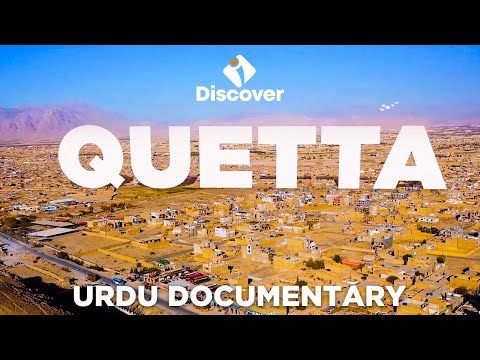


Quetta is the capital of Balochistan and the sixth largest city in Pakistan. It surrounded by high hills and is an important strategic post for the Pakistan Armed Forces. The city was severely damaged during the 1935 Quetta earthquake but has since rebuilt. Its population is around 1 million people.
Quetta is Pakistan’s sixth-largest city
Quetta is Pakistan’s sixth-larger city, with a population of between 1.8 million and 2.8 million people. The city was originally the capital of the Pashtun Kasi tribe. In the 11th century, it captured by Sultan Mahmud Ghaznavi. In 1543, the Mughal emperor Humayun rested in the city, leaving it to his son Akbar. It first visited by a westerner in 1828. Originally part of Afghanistan, Quetta briefly fell under British control during the First Afghan War in 1839. The city later incorporated into the British Empire in 1876.
Quetta has a cold semi-arid climate. During summer, temperatures usually rise above 25 degrees Celsius. During the winter, temperatures drop below freezing. In the spring, temperatures are near 15 degrees Celsius. Quetta does not experience a monsoon season. However, the city does experience snowfall, primarily in December and January.
Quetta is an important trading hub for the areas of Central Asia, western Afghanistan, and eastern Iran. It is home to a number of industries including cotton mills, a sulfur refinery, a thermal power station, and fruit canneries. The city also boasts two major museums and is a popular tourist destination.
The city has a diverse population. Quetta has a significant Hazara population. The Hazara community concentrated in the city of Quetta and the town of Mariabad. This ethnic group has blamed for bringing the coronavirus into Pakistan, but they only make up a small proportion of the population.
It surrounded by high hills
Quetta is known for its diverse landscape. The area covered with mountains and is rich in wildlife. It is home to a large number of animals, including wild sheep, leopards, and wolves. The surrounding hills are also home to many valuable forests, such as those of Pistachios and Junipers.
In the last decade, the central part of Quetta has subsided by a total of one meter and continues to do so at rates of approximately 120 mm yr-1. This land subsidence has caused damage to numerous buildings in Balochistan. In addition, the groundwater level in some parts of Quetta is depleting at a rate of 1.5 to five meters annually. This is primarily due to the growth of agriculture and the city’s population.
The city surrounded by mountain ranges on three sides, the most prominent of which are the Chiltan and Takatoo. The area also covered with numerous valleys, which are home to several small rivers. The city is situated at a height of approximately 1,680 meters.
The climate of Quetta is semi-arid, and there are large variations in temperature between the winter and summer months. Summer in Quetta lasts from late May to early September, with average temperatures of 24-26 degC (75-79 degF). Quetta’s highest recorded temperature was 42 degC on 10 July 1998. The autumn season lasts until mid-November, while winter occurs in late November and lasts until late March. The winter temperatures are very cold with snowfall mainly occurring in December and January.
It is a major strategic post for Pakistan’s Armed Forces
In recent years, Quetta has become a centre for Balochistan attacks. These attacks have rekindled unrest in the province. Most recently, in June 2020, militants attacked Quetta after a mother and child murdered by criminals. The bombing heightened the unrest in the area.
Since that time, the Pakistani military has developed a long-term presence in the city, including a forward operating base. This base is the largest in the country, and is use by the Pakistani Airforce and Navy. These forces are responsible for defending the city.
The military’s presence in Quetta has been a constant reminder of Pakistan’s strategic position in the region. The military’s ability to sustain a long-term presence on the border has made it a prime target in recent wars. However, this post has some disadvantages as well. The city has a low population density. Its location makes it easy for terrorists to strike Pakistan.
Pakistan’s Armed Forces’ military has also boosted by its air force and artillery. In August, the Pakistani Army launched its main offensive east of Sialkot. The 107 Brigade then rushed eastwards, stopping the Indian advance on a thirty-mile front.
Pakistan’s military has a clear picture of its strategic objectives. The Pakistani Army believes in being a Muslim nation while being part of the wider world community.
It is a natural fort
Quetta is a city that surrounded by mountains and is known as a natural fort. Its name, Quetta, comes from the Pashto word kwatta, meaning “fort”. Quetta’s urban center is multi-ethnic and multi-linguistic, and is home to people of different faiths, sects, and ethnicities. The city celebrates the Basant festival, which represents the courage and sacrifice of its citizens.
Quetta is Pakistan’s capital city and is located in the province of Balochistan. Its name comes from the Pashto word “kwatta,” which means “fort.” It surrounded by several impressive hills that have their own names. The highest of these hills is the Zarghun Ghar, which stands 3,500 metres above sea level.
Quetta inhabited during the 6th century, when it was a part of the Sassanid Persian Empire. In the seventh century, it became part of the Rashidun Caliphate. In the 11th century, the city ruled by the Persians and Mughals. The city briefly occupied by the British during the First Afghan War, but fully came under British rule in 1876. The British appointed Robert Sandeman as a political agent, and in 1876 the city incorporated into Pakistan.
Known as the “fruit basket of Pakistan”, Quetta is home to a stunning array of plants and animals. The city’s high elevation, at 1,680 meters, makes it a healthy climate.
Quetta is a hub of ethnically mixed subcontinent
Quetta is a city with a cultural diversity. The city has a diverse population, encompassing Pashtun, Baloch, and Shiite ethnic groups. Vehicles on the streets adorned with colorful Pashtun and Baloch political flags. While Shiite flags are black and white, the black and white horizontal stripes of Jamiat Ulama’e Islam remind locals of traditional Islamic law.
Quetta is located in northern Baluchistan, near the border with Afghanistan. It was once an important gateway between South and Central Asia. The city played a pivotal role during the intermittent Afghanistan conflict. The area surrounding Quetta is home to many mountains and pastures, with a wide variety of plant and animal species.
Recommended readings:
- Hanna Lake Quetta Pakistan
- Historic Places in Quetta
- Best Tourist Destinations in Pakistan
- Azam Khan Cricketer
- Pishin, Pakistan