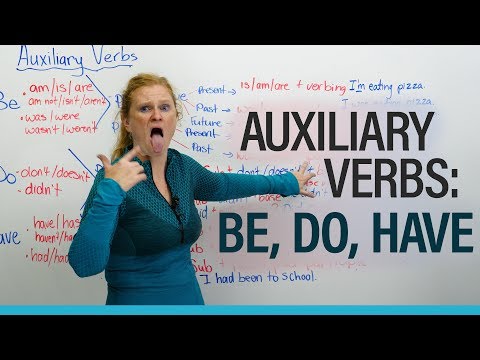


An auxiliary verb is a type of verb that adds grammatical or functional meaning to a clause. It can express tense, aspect, voice, emphasis, and modality. Auxiliary verbs generally accompany infinitive verbs or participles, which contain the main semantic content.
Can
As its name suggests, an auxiliary verb adds functional and grammatical meaning to a clause. It can be used to indicate tense, aspect, voice, emphasis, or modality. They usually accompany infinitive verbs and participles, which provide the main semantic content of a sentence.
Auxiliary verbs can be either simple or compound. They can be used in imperative and command sentences and add emphasis to the main verb. They may also be confused with linking verbs, but context clues help distinguish them. Examples of auxiliary verbs include “to be,” “to squirm,” and “to be.”
Auxiliary verbs can also help us express mood. In a conditional sentence, “had he listened to me, I would have done X.” In this case, the auxiliary verb “had” modifies the verb “listened.” The word “could” modifies the verb “could,” while “could” expresses the ability or will to do something.
The most common examples of auxiliary verbs are ‘can’ and’should’. The helping verb stands before the main verb, such as “should” or “should.” In some cases, an auxiliary verb is a part of the main verb, but it does not have its own meaning. Auxiliary verbs can also be used to introduce possibilities or to form a question.
Auxiliary verbs can also be used to show voice and tense. For example, “smacked her lips” implies that she slapped her lips and raspberry jelly dripped onto her shirt. However, if she had eaten a cake doughnut, the raspberry jelly would not have dripped on her shirt. In addition to indicating the frequency of Jerry’s accidents, is dripping expresses the frequency of his messiness.
May
May be an auxiliary verb is a verb that comes before another verb in a sentence. It has a grammatical function, and is used as a preposition. The auxiliary verb may be intransitive or transitive, or both. It can also be a copula.
Will
Auxiliary verbs are words that express a verb’s mood, voice, or tense. These words are also sometimes used to express inaction. The example below shows how to use the word will. To say “I’m squirming,” you would use the auxiliary verb will.
Auxiliary verbs are often used with main verbs to emphasize the verb’s mood, voice, and tense. They are also used to form negatives and questions. Most common auxiliary verbs include have, be, and do. Auxiliary verbs are used with almost all main verbs, and they are one of the most common verbs in the English language. Auxiliary verbs may be used before or after the main verb, depending on the context.
The will auxiliary verb is used to express willingness to do something or to make a decision. It can express the future or the present tense. It is also used as a modal auxiliary verb. When used in conjunction with another auxiliary verb, it can be substituted by another word. For example, in a polite invitation, you can use shall instead of will. If you’re asking for a favor from someone, you can substitute would.
When an auxiliary verb follows a main verb, it shows time and continuity. Auxiliaries have two forms: primary and secondary. Primary auxiliaries are be and do, and they are used in the construction of compound tenses. Do is used in questions, emphatic statements, and negative situations. Lastly, auxiliary verbs can change the form to indicate time, voice, and possibility.
Should
If you’re looking to make a sentence more concise, you may want to include auxiliary verbs. Auxiliary verbs have many different uses, and are most commonly used in the present, continuous, and future tenses. They’re also useful in special constructions like tag questions and passive voice.
If you’re writing an imperative or commanding sentence, you may want to consider using an auxiliary verb. Auxiliary verbs add emphasis to the main verb. They’re also helpful for expressing voice, modality, and more. The most important thing to remember when using an auxiliary verb is that it has to help the main verb.
In British English, should is more common than in American English, and it serves a number of different functions. For example, it can be used in place of the modal verb would. Moreover, it can be used after a relative pronoun. It can also be used to convey time and frequency of the action.
A good ESL textbook will cover modal auxiliaries in great detail, dividing them into various meanings and providing examples in different tenses. It should also provide help when dealing with the tricky modal verb would. This is a complex topic, so most ESL texts will cover it. One excellent book for modals is A University Grammar of English.
Auxiliary verbs are important for the context of sentences, and they can also help express tense, voice, and aspect. The primary auxiliary verbs are be, do, and have. These verbs help you construct compound tenses and are often used in negative sentences, questions, and emphatic statements.
Willing
Auxiliary verbs are often used to show possibility, obligation, or necessity. They are helpful for short responses to questions. They can be used in a variety of situations, such as when someone wants something in the future. For example, you can say that Marge no longer fantasizes about smothering George with a pillow. This auxiliary verb can also be used in questions of desire and in the presence of other verbs that show intention or desire.
Another example of an auxiliary verb is the word will. This auxiliary verb expresses a person’s ability or likelihood to do something. In a sentence, it can express mood, permission, or likelihood. You can also use this verb to give advice or express an idea.
Auxiliary verbs are also used to show the state of an ongoing event or condition. They are usually two or four words long and follow a base verb. They serve as a companion to the main verb and help the reader understand the event better. When used in imperative sentences, these words have a more direct meaning than when used in a sentence with a passive verb.
Auxiliary verbs form the tense, voice, and mood of a sentence. They are also known as helping verbs. Primary auxiliary verbs are be and have, which are used to construct compound tenses and express time and place. They are also used in questions and emphatic statements. They also have modal forms, which allow for possibilities, doubts, or necessity.
Willingness
An auxiliary verb is a word used to indicate willingness, ability, or permission to do something. It can also function as a command. Willingness and ability are the two main types of auxiliary verbs. However, there are differences between them. The American Heritage Guide to Contemporary Usage and Style describes four ways auxiliary verbs differ from main verbs.
Auxiliary verbs are a necessary part of English, whether you’re a student or an adult. Auxiliaries help other verbs to express ideas and meaning. They can also help show tense and add modality to sentences. Generally, auxiliary verbs appear with full verbs.
Another difference between main verbs and auxiliary verbs is the voice. Auxiliary verbs can be used in imperative and command sentences. They can also indicate when the main verb took place. When the auxiliary verb is used with the main verb, it gives the main verb more emphasis.
In addition to helping to convey the tense and voice of the sentence, an auxiliary verb can show the voice of the subject. Using an auxiliary verb with the passive voice allows you to express the way the action was received by the subject. A good example is a sentence such as “Sherylee smacked her lips as raspberry jelly dripped onto her shirt.” If she’d eaten a cake doughnut, she wouldn’t have been staining her shirt.
The auxiliary verb “is” is a very common example of an auxiliary verb. This verb is often used as an action verb or a linking verb. In addition to being an auxiliary verb, “is” stands alone in a sentence. In the case of a statement, the statement may be an imperative or a question.