

The early diagnosis and treatment of leprosy are important to avoid the spread of the disease. People who have been in close contact with an infected person should undergo annual examinations for the next five years. Family members should also be screened for this disease. In addition, annual examinations are recommended for household contacts and for five years after the last contact.
Multibacillary lepromatous leprosy
Multibacillary lepromatous leprasy is caused by a bacterium called M. leprae, which causes various multisystem infections. For example, ninety percent of men with lepromatous leprosy develop orchitis. It is therefore important to recognize the multisystem involvement of leprosy to promote early detection and prevention of long-term co-morbidities.
Optimal management of leprosy includes antimicrobial chemotherapy, regular clinical follow-up, and physiotherapy. It also involves reconstructive surgery if the leprosy patient develops deformity. It is important to follow up after the course of therapy to make sure that any residual disabilities are removed.
In the majority of leprosy patients, the first symptom is numbness. The patient loses sensation of temperature, pain, and deep pressure. These symptoms may precede the onset of cutaneous lesions by several years. Initial skin lesions are indeterminate in appearance and are often hypopigmented, though they can progress to borderline tuberculoid lesions if untreated. Nerves of the face are often affected, causing deformity and pain.
A patient with multibacillary leprosy harbors up to 104 drug-resistant mutants. Multibacillary leprosy is characterized by a type 2 reaction, which is considered to be immune complex-mediated. This rash has erythematous nodules and is accompanied by a range of systemic complications. It can involve the eye, limbs, and nerves.
To identify a patient with multibacillary leprosy, different diagnostic tests are used. Usually, a slit smear is used to identify the presence of acid-fast bacilli. Alternatively, a lepromin test is used to detect delayed type hypersensitivity to M. leprae antigens, which is not specific but is useful in classifying leprosy. Lastly, a skin biopsy may be performed to determine whether the bacterium is present in the skin. In this case, special stains may be required to demonstrate the presence of the bacilli.
Recombinant Lsr2 has been shown to induce lymphoproliferation in lepromatous leprosy patients. These results suggest that Lsr2 and peptides can stimulate T cells to respond to leprosy. The antigens Lsr2 and peptides are useful in dissecting the mechanisms of recognition by T cells in leprosy reactions.
Multibacillary leprosy is a disease caused by mutations of the leprosy bacilli. The bacterium’s mutations increase the susceptibility of the patient to infection with antibiotics. However, in the absence of drugs, the patient may have multibacillary leprosy with minimal or no immune response at all.
Incubation period
The incubation period of leprosy disease is a significant issue when it comes to leprosy control. It can be as long as five years before symptoms begin to appear. Although the disease is thought to be eradicated in most areas, it is important to maintain careful surveillance of suspected cases.
While the disease has been largely eradicated in many countries, it still exists in many developing countries, where the incubation period is long enough for the disease to remain subclinical for years. It can also spread through international migration and the importation of workers. Because of this, it can be difficult to estimate the true incidence of the disease. However, the World Health Organization considers a region to be eradicated if it has less than one case per ten thousand residents. For instance, in 1994, Thailand had a leprosy-free region.
While the incubation period of leprosy disease can range anywhere from a few weeks to more than 30 years, the average is three to ten years. Fortunately, most cases are not a serious threat and can be easily treated. Leprosy is caused by a slow-growing bacteria called Mycobacterium leprae.
Infected people often experience the following symptoms: fever, skin lesions, and peripheral neuropathy. Infected people may also develop erectile dysfunction and may become infertile. These symptoms are caused by the disease’s effect on the autonomic nervous system. These nerves control body functions, including sweating and skin moisture. This causes skin to become dry and prone to secondary infections. In severe cases, limbs may need to be amputated, although early detection can reduce the need for this treatment.
Most cases of leprosy occur in countries that have leprosy endemic areas. People living in these areas are in constant physical contact with infected people. Genetic defects can also make people more susceptible to the disease. For example, region q25 on chromosome 6 is linked to an increased risk for leprosy infection.
The incubation period for leprosy disease is approximately six months in the case of paucibacillary disease and twelve months for multibacillary cases. If caught early, the disease can be controlled and the patient can be cured. Treatment with an antibiotic, such as rifampicin, is essential for controlling the disease and eliminating the risk of transmission to other people.
People who have come into contact with a leprosy-infected person should undergo a medical examination every year. Antibiotics should be continued for at least three months to kill the leprosy bacteria. However, leprosy can be spread from one person to another if not treated promptly. To prevent spread of the disease, it is important to undergo annual examinations of household contacts and people who have had prolonged contact with an infected person.
The infection is transmitted by respiratory secretions, likely via droplets. Leprosy is an infectious disease caused by the bacterium Mycobacterium leprae. It causes leprosy by multiplying slowly. The symptoms of leprosy include a skin rash, peripheral neuropathy, and organ deformities. Antibiotics can stop the disease and reverse the damage caused to the nerves.
Treatment
There is currently no known vaccine or other preventive treatment for leprosy disease. However, antibiotics are an effective treatment for people with leprosy. Antibiotics kill the bacteria that cause leprosy. However, there are several different drugs that are used to treat the disease. This is known as multidrug therapy. Single-dose therapy is not recommended in the treatment of leprosy.
If left untreated, leprosy can cause permanent nerve damage. This affects a person’s ability to feel pain, temperature, and injury. They may also experience muscle weakness, which makes them more susceptible to injuries. Additionally, if the leprosy has affected the nerves in the face, it can lead to loss of sight and blindness. Other symptoms can include facial nerve damage and swollen skin, as well as painful fever.
Although the symptoms of leprosy are mostly visible on the skin, the disease can also affect the eyes and thin tissue lining of the nose. It is characterised by disfiguring bumps and sores on the skin, which don’t go away for weeks. Inflammatory reactions may also lead to swollen lymph glands and painful joints.
The treatment for leprosy is based on early detection and medical diagnosis. Steroid medications are used to minimize acute inflammation and pain. However, in advanced cases, surgery is required. However, doctors will carefully customize this procedure based on the patient’s individual condition. In the United States, some people with the disease are treated at special clinics run by the National Hansen’s Disease Program.
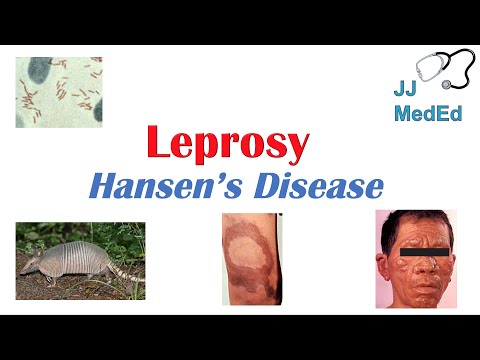
Leprosy is a chronic infection caused by the bacterium Mycobacterium leprae. In untreated patients, leprosy can cause skin lesions and deformities that can cause pain, disfigurement, and even blindness. While there is no cure for leprosy, there are effective treatments available that can stop the disease from spreading.
Antibiotics are often prescribed in the treatment of leprosy. Most commonly, these medicines are taken for a minimum of six months, although some patients may need more time. However, antibiotics do not address the nerve damage that leprosy can cause. Typically, two or three antibiotics are given daily to adults with leprosy, and these medications may be required for as much as two years.
Infection with leprosy can occur at any age. However, there are two age peaks in the disease. Infected individuals can transfer the disease to others through respiratory droplets. In infants and young children, it can also be transmitted through the placenta. Although leprosy is not highly infectious, people who are in frequent contact with lepers are at high risk of contracting the disease. The incubation period of the disease is long, and symptoms are typically mild at first.
In the United States, a dedicated program has been established to study and treat leprosy. The National Hansen’s Disease (Leprosy) Program provides treatment and research. The disease is caused by the bacterium Mycobacterium leprae. However, it is not highly contagious, and there is minimal risk of death. In most cases, it is treatable through antibiotics.