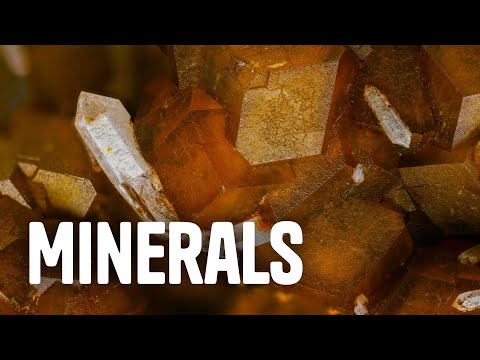


Minerals are solid chemical compounds that have a defined chemical composition and specific crystal structure. They are found naturally in their pure forms. Read on to learn more about the types of minerals and where they are found. Minerals are important to humans, since they help keep the planet healthy. However, not all minerals are created equal.
Minerals
Minerals are compounds with a defined chemical composition and specific crystal structure. They are found naturally, in their pure form. Minerals are a source of energy and can be used in various applications. Here is a brief overview of the properties of minerals. Minerals can be used to create electricity, heat and light.
Minerals can be composed of single chemical elements or natural metal alloys. Some of them are even end members of a continuous series. In addition to chemical and physical properties, minerals also have atomic structure and composition. Economic minerals include metals, rocks and hydrocarbons. Mining, quarrying, and pumping are the methods for extracting economic minerals. Energy minerals, such as coal, oil, natural gas, and uranium, are often used for energy production.
Minerals also play an important role in food flavoring. For instance, halite is a mineral with a salty taste that is dissolved in food easily. It does not cause tooth damage, and it spreads flavor throughout food. No other mineral has these physical properties. This makes it an ideal choice for flavoring foods.
Minerals can exhibit a variety of colours. These variations can be caused by trace elements or structural irregularities, or may be caused by specific wavelengths of light that the minerals absorb. These differences make them different species, and are known as minerals. Minerals are grouped into two major types: crystalline solids and amorphous ones.
Minerals are classified according to their physical properties and chemical composition. Names are given to them by the mineralogist who classified them. This classification makes it easier for scientists to identify and classify minerals. For example, halite, a mineral composed of an equal ratio of sodium and chlorine, is classified as a mineral.
Minerals are crystalline substances that form naturally. They can be composed of a single chemical element or a chemical compound. Table salt is a common mineral composed of sodium chloride. It is a type of salt that forms hexagonal crystals. Quartz is another common mineral and is composed of silicon dioxide. Coal is a natural mineral and is made from carbon trapped by living organisms during photosynthesis.
Minerals are naturally occurring inorganic substances that have a certain chemical composition and crystal structure. Many rocks are composed of a mixture of several different minerals, but some rocks may contain only one type. Examples of common minerals include quartz, feldspar, calcite, limestone, sandstone, and basalt.
Fluorescent and phosphorescent minerals glow when illuminated by ultraviolet, X-rays, and electron beams. Calcite, for example, appears white in visible light, but when exposed to UV light, it fluoresces in different colors. Fluorescence occurs when trace elements in the mineral cause it to emit light.
Their chemical composition
The chemical composition of minerals is the primary factor that determines their physical properties. While some minerals are very similar to each other, they have different physical properties. For example, graphite has the same chemical composition as diamond, but is very different from diamond in terms of its physical properties. The chemical composition of a mineral determines its hardness, density, and luster. Different minerals have different properties, and scientists can use these characteristics to identify their properties.
While minerals can be made from a single element, most are chemical compounds that contain multiple elements. For example, diamond is made from carbon, and quartz is a compound of silicon dioxide and oxygen. The ratio of these elements determines the crystalline structure of a mineral. However, the chemical composition of most minerals is not as well defined as quartz. For example, siderite does not occur as pure iron carbonate, but can contain magnesium, manganese, or calcium.
The chemical composition of minerals varies from rock to rock. Carbonate minerals, for example, contain carbonate ion and dissolve easily in acidic environments. Oxides, on the other hand, contain oxygen as an anion. Examples of these types of minerals are hematite Fe2O3 and magnetite Fe3O4, as well as pyrolusite MgO. Other types of minerals include halides, which contain a halogen element as an anion, and sulfates, which have a polyatomic sulfate ion.
Minerals also have a definite atomic structure. This atomic structure helps determine the types of minerals they contain. In addition, every mineral has a different diffraction pattern. Therefore, crystallographers can use these patterns to identify the type of mineral they are studying. They also use these patterns to classify minerals into different categories, including mineraloids.
Mineralogy aims to identify the chemical composition of minerals in order to understand their physical and chemical properties. The primary instrument used for mineralogy is called an electron microprobe, which focuses a beam of electrons on a thin section of rock. The thin section is coated with carbon and polished to a micrometre in diameter. During this process, electrons cause atoms within the mineral to emit diagnostic X-rays. Using the data, investigators can infer the conditions under which mineral species were formed.
In the Middle Ages, minerals were classified based on their physical properties. For example, corundum and diamond would be placed in the same category if they were both very hard. However, new methods of classification were developed as scientists learned how to determine the chemical composition of minerals. James Dwight Dana, a mineralogist at Yale University from 1850 to 1892, developed a system for classifying minerals based on their chemical composition.
The majority of minerals in the Earth’s crust are made up of silicon and oxygen. Other important minerals include magnesium, aluminum, and iron.
Their location on the earth
The earth is composed of minerals that have different properties. These properties are often characterized by elaborate processes that are used to identify specific minerals. The study of these properties is known as mineralogy. It is a branch of geology that focuses on the physical and chemical characteristics of different minerals and their formation.
Minerals are solid materials formed from elements, such as silicon, oxygen, and carbon. Most minerals are made up of two of these elements. Silicon, for example, is found in great amounts in many rocks. Oxygen is present in the crust in small amounts. The remaining elements are relatively rare, occurring in very low concentrations.
There are a variety of metallic minerals in the earth. Many are essential to modern civilization. Generally, metallic minerals occur in parts per billion or less. A mineral is called an ore when one or more of the elements in it can be extracted profitably. Processing is almost always necessary to isolate the useful element. Chalcopyrite is a type of ore that contains copper, iron, and sulfur.
The use of minerals is directly linked to economic growth. This means that countries that are rapidly developing will find it difficult to reduce their mineral use. However, countries that already have high mineral consumption may find it easier to reduce their use. One way to reduce mineral consumption is by using technology. Digital cameras have almost eliminated the photographic demand for silver, which is used for film development. The use of steel in construction can be reduced as well by using stronger alloys. Recycling and reusing are other ways to reduce the demand for natural resources.
Minerals are generally found in small concentrations in areas of the earth’s crust. They are found as ore deposits in areas where they have been deposited by geologic processes. To extract a valuable mineral from a deposit, geologists must find a deposit with high concentration of that mineral. This process can take many years, as the signs of a mineral deposit are small and difficult to detect. The location and size of a mineral deposit determines its economic profitability.
Minerals are also found in rocks under oceans. However, only continents have been discovered with mineral deposits, and ocean deposits are only expected to be found in the future. The crust of the earth is about 35 to 40 kilometers (or twenty to twenty miles) thick, and it lies below a layer called the mantle. There is a high probability that mineral deposits may exist in the mantle, but current technology cannot locate these deposits.
Mining companies use satellite imagery to identify potential locations for mineral exploration. The technique allows mining companies to pinpoint locations where they can find minerals and other materials. The information is then used to map the extent of mineral deposits.