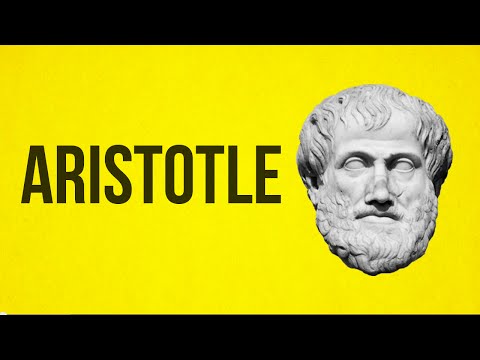


Aristotle was born and raised in a town called Stagira in the Macedonian region of northeastern Greece. At age seventeen, he was sent to Athens to study at Plato’s Academy. He remained associated with the Academy until 347, when he left for Assos in Asia Minor to further his philosophical research.
Philosopher
The Philosopher Aristotle lived during the first century BCE. Aristotle was a brilliant student, a graduate of the Academy of Athens before Plato’s death. Upon graduating, he was awarded a faculty position teaching rhetoric and dialogue. Initially, Aristotle thought he would take over the Academy after Plato’s death, but that position was instead given to his nephew. So, Aristotle left Athens and travelled to the Greek islands to conduct experiments and study.
Philosopher Aristotle’s works include the “Organon,” a collection of his writings on logic. The Organon includes six books, including the “Aristotle’s Discourses,” “On Interpretation,” and “On Topics.” The Organon also contains Aristotle’s views on syllogisms, which are a type of reasoning.
Naturalist
Aristotle’s Naturalist was a philosopher who, in his day, admired Plato, but saw the dangers of Plato’s idealism. Aristotle is sometimes regarded as bringing philosophy “down to earth.” He is the archetype of philosophical naturalism, the idea that reality consists of a physical world that follows laws that are consistent and unchangeable. Philosophical naturalists also deny the existence of a separate supernatural order, such as God.
The naturalist teleology of Aristotle assumes that everything in nature has a purpose and is specially designed for a function, and that with the appropriate nurture, it will fulfill its purpose. This idea underlies Aristotle’s account of the origin of the state.
Teleologist
In Aristotle’s Teleologist, Monte Ransome Johnson provides a critical analysis of Aristotle’s conception of teleology. He argues that teleology can be applied to a wide variety of topics, from elemental theory to astronomy to ethics. This study also serves as a useful introduction to Aristotle’s philosophy.
Aristotle asserted that things are made for a purpose, and therefore have an intrinsic value. However, he did not believe in the idea that things are created for a divine agent. Instead, he believed that things happen for good. In other words, we do things for good reasons.
Aristotle also defined formal nature as the second level of facts, separate from the material. This second level of facts can be explained teleologically, which means that they postulate a goal to be achieved or maintained by a phenomenon. For instance, a living thing’s form determines its growth and behavior.
Poet
The poet’s work has much in common with Aristotle’s theory of tragedy. Tragic protagonists, or hero-figures, undergo a change of fortune, often ironically. Aristotle discussed this in the Poetics of Tragedy, and he also discusses other elements of the tragedy form. In particular, Aristotle mentions two features of plot that are important to the tragedy. The first is reversal, which is connected to the concept of harmartia, and the second is recognition, where the protagonist realizes the truth.
According to Aristotle, the poet should be aware of the emergence of action in the world, a skill that requires a keen eye. In order to create a great work, the poet must be able to spot the emergence of action, and sense when actions are worth paying attention to. These actions are rarely obvious in the world, so a poet must have a keen sense for them.
Poet’s methods
In poetry, the poet must go from particular to universal. He does this by using language, rhythm, and harmony. In contrast, the painter imitates the world through form, colour, and music. The poet’s methods of expression also differ from those of a painter or a musician. In addition, the poet’s methods of expression differ from genre to genre. For example, there is a difference between a dramatic poem and a narrative poem.
In his Discourse on Poetry, Aristotle discussed the elements of poetry. But he largely left room for the poet’s witting craft. Aristotle believed that a great poet must be particularly gifted in order to produce good poetry. He should be able to imitate human characters without losing his own character.
Biological works
One of the most interesting and well-known passages from Aristotle’s biological works is his encomium on studying animals. This passage is a classic example of a systematic philosophical approach. Aristotle used various methods of classification to describe different parts of animals. His approach was systematic because he constructed philosophical distinctions that can be used in many contexts. For example, the “more” and “less” concepts have their roots in biology, but can also be applied to other areas.
Biology is often viewed as an area of study that Aristotle studied in his middle age, between the ages of forty and fifty. However, some scholars believe that Aristotle may have developed an interest in biology as early as his early twenties, or even later. Other scholars suggest that his interest in biology began when he left the Academy after only twenty years, and had just completed his antiphenomenal metaphysics. Regardless of the source, it’s important to consider Aristotle’s biological works as a source for understanding other parts of his writings.
Psychology
The origins of psychology can be traced back to the early Greeks. The 17th century philosopher Rena Descartes first introduced the concept of dualism, which is the theory that the mind and body are separate entities that work together to create the human experience. Many issues in psychology are rooted in the early philosophical traditions, including the teachings of Aristotle.
Aristotle’s work on psychology is wide-ranging, with an emphasis on the nature of life. His work on psychology also deals with the nature of the soul and the nature of animate beings.
Mathematicians
Since Plato, mathematics has been seen as the prototype of knowledge. It provides a logical framework for understanding science. Newton and Galileo both connected mathematics with science, advancing the logical empiricism. The twentieth century saw further mathematical advances that took the syllogism to a more comprehensive theory. As a result, completeness of a mathematical theory has become the standard for understanding logic.
Aristotle, on the other hand, argued that the theory of truth is rooted in a metaphysical theory. While standard logic is compelled by the theory of truth, Aristotle and mathematicians who were preoccupied with the foundations of mathematics showed that these assumptions are insufficient. Aristotle sees argument as the rational core of discourse, but his notions of truth are inadequate for supporting a theory of argument.